“The window opened, the curtain lifted, and the letter slipped from the desk.” A reader can understand that sentence quickly. A video prompt containing the same words may still leave an important question unanswered: what happens first, and what should the viewer notice?
For a short visual exercise, choose one change and make the relationship around it explicit. You are not trying to compress the whole story into a prompt. You are finding the visible event that carries this moment.
The scene and prompts in this guide are original planning examples. They have not been presented as tested generation results. The method is useful on paper before any tool is opened.

Separate the trigger, the change, and the result
Read the sentence as a small chain. A breeze enters through an already open window. A curtain billows inward. A loose envelope on the desk begins to slide.
This version changes the original wording deliberately. Opening the window would require another action, perhaps a person or a moving latch. Keeping it already open lets the shot concentrate on air and light objects. The story can explain who opened it elsewhere.
Write three short notes:
- Before: an envelope lies near the edge of a desk beside an open window.
- Visible change: a breeze lifts the curtain inward.
- After: the envelope has moved closer to the edge.
These notes expose decisions the sentence leaves flexible. Does the envelope need to fall? Must the camera show the floor? Is its final position important? Answer only what the scene needs. If the fall matters to a later event, it may deserve a separate shot.
Do not ask every object to perform
A crowded prompt might say:
The window swings open, the curtain rises, the letter flies away, the camera spins around the room, and someone reaches for the letter.
There are several plausible points of attention and little room for a readable relationship. A narrower draft is easier to evaluate:
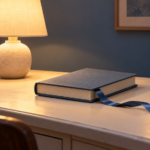
One continuous side view of a quiet desk beside an open window. A soft breeze lifts the lavender curtain inward. A loose cream envelope near the desk edge slowly slides a short distance. The desk and camera remain still. Soft daylight and a faint rustle of fabric.
This is a suggested prompt, not a promise that a model will produce the intended causal order. “One continuous view” and “camera remain still” describe the desired shot. They do not lock the generator to a deterministic result.
If the envelope starts moving before any visible change in the curtain, ask whether the viewer still understands the breeze. The answer may be yes. The aim is readable action, not a literal simulation of each word.

Decide what the writing should continue to carry
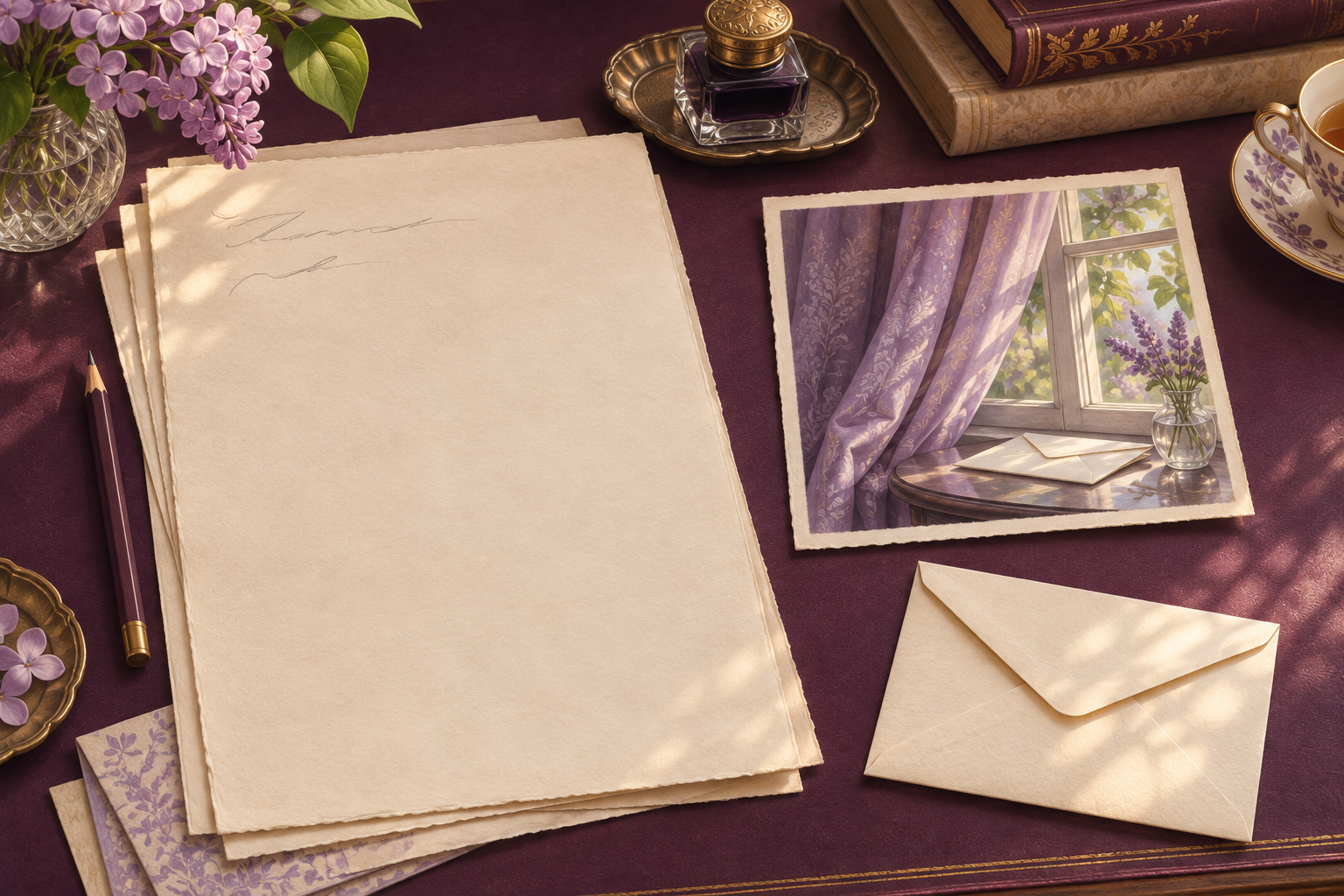
Video need not explain why the envelope matters. A nearby sentence can supply that information: “She had left the reply unsigned.” The shot can show its precarious position without inventing handwriting, a readable name, or a character’s thoughts.
Keep a division of labor. Let prose carry the context that depends on interpretation. Let the image carry an event that can be seen. This protects the scene from accumulating extra symbols every time you try to make its meaning clearer.
A useful exercise is to remove the prose temporarily. Can you still describe the physical change? Then restore the prose. Does the combination add something, or merely repeat the same fact twice? Repetition is sometimes intentional, but it should be a choice.
Use the generator for the selected event
The Flaq AI free AI video generator is one place to try the shortened scene. Its current page lists MiniMax H3, 100% free access, no signup required, and unlimited generations. Its FAQ specifies five-second, 480p previews with built-in audio, and explains that requests are processed one at a time and may queue. These are website statements, not performance measurements from this exercise.
For text-to-video, leave both frame-image slots empty. For image guidance, prepare both a start image and an end image. Make those images compatible: the same desk, envelope, window position, and lighting should support a plausible transition. A pair with an envelope on the desk at the beginning and a different object on the floor at the end introduces another continuity problem.
Select a landscape, portrait, or square layout according to where the scene will be used. Do not choose portrait and expect an automatically reframed landscape master later. Review each composition on its own terms.
Read the result as a viewer, then revise as a writer
On a real candidate, watch once without pausing. Write one plain sentence describing what you actually saw. If that sentence is “The camera moved around a curtain,” but your intended event was “A breeze put the envelope at risk,” you have found a useful mismatch.
Then inspect three things: whether the important object stays identifiable, whether the change has a clear direction, and whether the ending leaves enough information to understand the moment. Listen once with audio and once without it. A rustling sound can support the event, but the essential action should not depend on a perfect sound cue.
If the action is too busy, remove one movement. If the ending is unclear, simplify the endpoint. If the sentence truly needs a sequence of separate events, make separate shots and arrange them in an external editor. This free tool produces a focused shot; it is not a system for exact event timestamps, automatic narration, or full-story assembly.
Finish the exercise by rewriting the original sentence. You may keep its rhythm, split it, or move one event into the next paragraph. The visual prototype has done its job when it helps you decide what the writing needs to say.
Disclosure: This guide is published by the Flaq AI team and includes our own tool. The illustrations were made with AI assistance.