AI writing tools for writers have become increasingly sophisticated, but choosing between ChatGPT, Jasper, and Copy.ai depends on what type of writing you do, your budget, and how comfortable you are with prompt engineering. Based on an analysis of hundreds of writer experiences across Reddit, forums, and user reviews, ChatGPT offers the most versatility and best value at $20/month (or free with limitations), making the AI writing tool ideal for you and me, including bloggers, content writers, and anyone who needs a flexible assistant..
On the other hand Jasper is designed to target marketing teams and agencies with its template library and brand voice features, but at $49-$125/month. This is overkill for solo writers who can achieve similar results with ChatGPT for less. Copy.ai as an ai writing tool has pivoted heavily toward sales and B2B workflows, rather than pure content creation, it positions itself as a go-to-market platform that happens to include writing features. The real differentiator isn’t the tool itself—it’s your ability to craft effective prompts and edit AI output into something that reflects your expertise and voice. Writers who succeed with any of these tools treat them as research assistants and first-draft generators, not writer replacements.
Check Out Our Comprehensive Article On: Best Free Writing Software: Your Ultimate Guide to Choosing Right
Key Takeaways
- ChatGPT dominates for versatility: Writers report using it for everything from blog outlines to script dialogue, with the $20/month Plus plan offering the best balance of capability and cost
- Jasper’s premium pricing ($49-$125/month) only makes sense for agencies or teams who need brand voice consistency across multiple writers—solo freelancers rarely justify the cost
- Copy.ai shifted focus to sales workflows and GTM operations in 2024, making it less relevant for pure content writers and more useful for marketing teams creating ad copy and sales sequences
- The free ChatGPT tier now rivals paid competitors for many use cases, though it lacks features like memory, advanced models, and priority access during peak times
- Prompt engineering skill matters more than tool choice: Writers who learn to craft detailed, context-rich prompts get better results from any platform
- All three tools produce hallucinations and require fact-checking—experienced writers report spending 30-50% of their time editing and verifying AI-generated content
- Template libraries (Jasper’s main advantage) have diminishing value as writers develop their own prompt libraries and workflows

What Each AI Writing Tool Actually Does (Without the Marketing Hype)
ChatGPT:
Across the world, ChatGPT brought a wave of fear, that swept into the writing industry until it evolved into the most flexible writing aid. Writers feared that it has come to replace them, because it could brainstorm, outline, draft, edit, and even code. This tool exceled at understanding context across multi-turn conversations, later allowing writers to fine tune their points without starting from ground level.
Real-world use cases from writers:
- Writers in communities like r/freelanceWriters commonly report using ChatGPT to generate multiple article angles quickly, then selecting the most promising one to develop fully
- Screenwriters report using it for dialogue polish and character consistency checks
- Technical writers took its ability to simplify complex concepts without losing accuracy to handle their technical writings
- Content creators are known to utilize it to repurpose long-form content into social media posts, email newsletters, and video scripts
Pricing breakdown:
- Free plan: GPT-3.5 is always available for limited time during peak times, and it has no memory features
- ChatGPT Plus ($20/month): this is the GPT-4, an advanced level of GPT-3.5, its access to users is prioritized, with good response times, early feature access, good memory across conversations
- ChatGPT Team ($25-30/user/month): Workspace features, admin controls, higher usage limits
Strengths:
- Most natural conversational flow for iterative work
- Massive knowledge base through 2023 (updated models through early 2024)
- Plugins and custom GPTs extend functionality
- Strong at understanding nuance and context
- Best cost-to-value ratio in the market
Actual limitations:
- No built-in templates (you build your own prompt library)
- Can be verbose and require explicit instructions to be concise
- Free tier has significant limitations during high-traffic periods
- Requires more prompt engineering skill than template-based tools
ARE YOU A FREELANCE WRITER?
Join Inkwrit Today
Jasper: The Marketing Copy Specialist ( AI Writing Tools )
Jasper formerly known as Jarvis built its reputation as a marketing-focused AI writing tool with over 50 templates for specific content types. The platform targets agencies, marketing teams, and professional copywriters who need consistent output across multiple projects and team members.
Real-world use cases from copywriters:
Marketing agencies report using Jasper’s brand voice feature to maintain consistency when multiple writers work on the same client
- E-commerce businesses use product description templates to generate hundreds of listings quickly
- Email marketers appreciate pre-built frameworks for sales sequences and nurture campaigns
- Ad copywriters use the platform’s A/B testing suggestions for Facebook and Google ads
Pricing breakdown:
- Creator ($49/month): One user, one brand voice, unlimited words, access to templates
- Teams ($125/month): Three users, three brand voices, collaboration features, analytics
- Business (custom pricing): Unlimited users, custom templates, API access, dedicated support
The pricing represents Jasper’s biggest challenge. Discussions in writing and marketing communities consistently note that ChatGPT Plus delivers the majority of Jasper’s functionality at a fraction of the cost. The consensus is that Jasper’s premium pricing only makes sense for agencies and teams with client billing that justifies the expense.
Strengths:
- Template library saves time for common marketing formats
- Brand voice training creates more consistent output
- A Built-in plagiarism checker and Grammarly integration
- A Collaboration features for team workflow
- SEO mode with keyword integration
Actual limitations:
- Expensive for solo practitioners
- Templates can make output feel formulaic
- Requires fact-checking like any AI tool
- Customer support has received mixed reviews since 2023
- Some writers find it less flexible than ChatGPT for creative projects
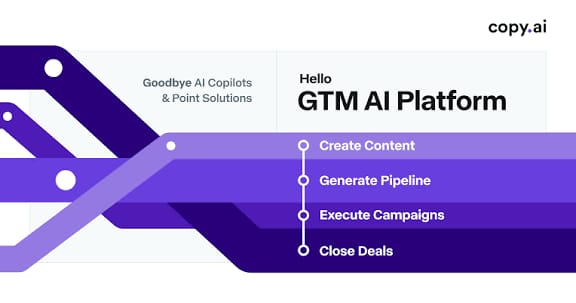
Copy.ai: The Sales and Go-to-Market Platform ( AI Writing Tools )
Copy.ai began as a writing assistant but pivoted significantly in 2024 toward being a complete go-to-market (GTM) platform. The company now markets itself as a tool for sales teams, marketing operations, and business development, with writing as one component of a larger workflow system.
Real-world use cases from marketers:
- Sales teams use the platform to generate personalized outreach sequences at scale
- Marketing ops professionals appreciate workflow automation for campaign creation
- Social media managers use it for rapid-fire content generation across platforms
- Small business owners without dedicated marketing teams find the templates helpful for basic needs
Pricing breakdown:
- A Free tier: 2,000 words per month, basic templates, limited features
- A Pro ($49/month): With unlimited words, all templates, 5 brand voices, priority support
- Team ($249/month): With 5 users, unlimited brand voices, workflow automation, analytics
- An Enterprise (custom): Custom workflow, API access, dedicated account management
Strengths:
- Fastest generation speed for short-form content
- Strong social media and ad copy templates
- Workflow automation saves time on repetitive tasks
- Good for businesses that need quick, “good enough” marketing copy
- Integration with sales and marketing tools
Actual limitations:
- Pivot to GTM platform alienated pure content writers
- Less sophisticated for long-form content compared to competitors
- Workflow features have a learning curve
- Community and support resources are thinner than ChatGPT’s massive user base
- Output quality for complex topics trails behind ChatGPT and Jasper
Comparison (Real Writers’ Experiences)
Long Form Content E.g. Blog Posts, Articles, Guides
ChatGPT performance:
As years progressed writers consistently report that ChatGPT handles long-form content best when you work in repeated form. Invariably instead of asking it to write a 2,000-word article with one prompt, you start with an outline, then expand them headings by headings. This keys into, a common workflow discussed in r/freelanceWriters where it was revealed that, they ask ChatGPT for multiple article angles, select one, they have it create a detailed outline, finally they write each section individually while editing along the way. Writers in these communities consistently report time savings of 50-60% using this approach
The tool excels at maintaining context across a conversation, so you can say “make that section more technical” or “add a metaphor to explain this concept” without repeating all the previous context.
Jasper performance:
Jasper’s blog post templates provide structure but writers report the output feels generic without significant editing. The SEO mode helps with keyword integration, but the final product requires substantial rewriting to add unique perspective. A content marketer noted: “Jasper gives you a decent first draft faster than ChatGPT if you’re not good at prompting. But if you know how to prompt well, ChatGPT produces better raw material.”
Copy.ai performance:
Copy.ai struggles most with long-form content. The platform’s strength is short, punchy copy, and writers report that blog posts generated through Copy.ai require extensive expansion and restructuring. It works better as an outline generator or intro paragraph writer than a full article assistant.
Winner: ChatGPT for flexibility and output quality, especially for writers comfortable with prompt engineering.
Creative Writing E.g. Fiction, Scripts, Poetry ( AI Writing Tools )
ChatGPT performance:
In the creative writing industry, creative writers reported a mixed results but generally they favored ChatGPT for creative projects. Revealing that the tool can help with character development, plot hole identification, and dialogue polish. However, it still produces results that are clichés and requires significant editing to develop a unique voice. in addition to this discovery, screenwriters in communities like r/Screenwriting discuss using ChatGPT to generate rough first-draft dialogue as a starting point, then rewriting it completely. The shared consensus is that while AI helps overcome the blank page problem, the output requires substantial revision to develop authentic character voices.
Jasper performance:
Jasper has creative writing templates, but they’re clearly secondary to its marketing focus. Writers report that the output feels formulaic and lacks the nuance needed for fiction. The tool works better for content marketing that tells stories than actual creative fiction.
Copy.ai performance:
Copy.ai isn’t designed for creative writing and performs poorly in this category. The platform’s strength is short, conversion-focused copy, not narrative development or character work.
Winner: ChatGPT by default, though all three tools have limitations for serious creative work.
Social Media Content ( AI Writing Tools )
ChatGPT performance:
Not only can, ChatGPT generate social media posts, when you prompt it to, however you need to specifically tell it to be concise and punchy. Without giving this directives, it will produce contents that are too long and explanatory for platforms like Twitter or Instagram. Writers who we have noticed succeed with ChatGPT for social media use detailed prompts and they specify character limits, tone, and hook requirements.
Jasper performance:
Jasper’s social media templates help structure posts for different platforms, but the output often requires editing for authenticity. The tool tends to produce “marketing voice” content that doesn’t sound like a real person posting organically.
Copy.ai performance:
This is Copy.ai’s strongest category. The platform excels at short, attention-grabbing copy designed to stop scrolling. Social media managers appreciate the speed and variety of outputs. The tool generates hooks, captions, and hashtag suggestions quickly.
Winner: Copy.ai for pure social media management and high-volume posting needs.
The Hidden Costs No One Talks About ( AI Writing Tools )
Time Investment in Learning to Prompt
Every writer ever interviewed all emphasized that prompt engineering is a learned skill. The difference between mediocre and excellent AI output comes down to how you ask for what you need.
What writers learned the hard way:
- Vague prompts (“write a blog post about AI tools”) produce vague output
- Context matters enormously—telling the AI your audience, desired tone, and article purpose produces dramatically better results
- Examples improve output quality more than lengthy instructions
- Repeatative refinement beats trying to get perfection in one prompt
Discussions in r/freelanceWriters reveal a common learning curve where writers initially struggle with AI tools due to poor prompting, then see dramatic improvements in output quality after learning to provide context, examples, and specific instructions. The typical learning period ranges from 2-4 weeks of regular use.
The time investment varies by tool. ChatGPT requires the most prompt engineering skill but offers the most flexibility. Jasper’s templates reduce the learning curve but limit creativity. Copy.ai falls somewhere in between.
Editing Time Required( AI Writing Tools )
One proven fact is, no AI tool can produce publishable content without your editing input. Writers has consistently reported spending 30-50% of their total time editing AI drafts, which includes:
- Fact-checking (all tools hallucinate occasionally)
- Adding unique perspective and expertise
- Removing generic phrasing and clichés
- Restructuring for better flow
- Injecting personality and voice
Content writers in online communities consistently report that AI tools reduce their article writing time by approximately 50%, with a typical workflow involving one hour for AI-assisted drafting and one hour for editing. However, they emphasize that skipping adequate editing time results in generic content that lacks unique perspective.
The “Generic Content” Problem ( AI Writing Tools )
The biggest hidden cost is taking the risk to publish content that sounds undifferentiable from the thousands of other AI-generated articles. This is the very reason that propels writers who achieve success with AI tools to share these common practices:
How to avoid generic output:
- Never accept the first draft—regenerate 2-3 times and combine the best parts
- Add specific examples from your experience that AI can’t know
- Include contrarian opinions or nuanced takes, not just consensus views
- Fact-check and add recent data that gives content freshness
- Inject personal voice through editing, even if AI wrote the base structure
In addition it has been noted that writers who successfully use AI tools describe this work relationship as “AI provides the skeleton, while the writer adds the substance and personality.” Publishing unedited AI output without adding unique expertise and voice consistently produces poor results.
Which AI Tool Should YOU Choose? ( AI Writing Tools )
Choose ChatGPT If…
You’re a blogger, content writer, or freelancer who needs unlimited writing flexibility. Know that ChatGPT can work almost any writing task, starting from research summaries to full articles, and to creative projects. Their $20/month Plus subscription offers you excellent value, and even the free tier handles many writing cases efficiently.
You’ll succeed with ChatGPT if you’re willing to learn prompt engineering and prefer iterative refinement over template-based workflow. Writers who like control and customization find ChatGPT most satisfying.
Writers in r/freelanceWriters who’ve tried multiple tools often report returning to ChatGPT after testing premium alternatives like Jasper. The cost savings and flexibility of ChatGPT outweigh Jasper’s template-based structure for most solo practitioners, particularly once they develop strong prompting skills.
Choose Jasper If…
You’re running a marketing agency or leading a content team that needs consistent brand voice across multiple writers. Jasper’s collaboration features, brand voice training, and template library provide structure that helps teams work efficiently.
Solo writers rarely find Jasper’s premium pricing justified unless they’re billing clients at rates that make $125/month negligible. However, if you’re not comfortable with prompt engineering and want guardrails that guide you toward acceptable output, Jasper’s templates provide that structure.
Most marketing agencies active in communities like r/marketing report that Jasper’s brand voice features provide value when used to manage multiple writers across numerous client brands. However, the consensus among solo freelancers we read their statement, agreed that the premium pricing rarely justifies the benefits compared to lower-cost alternatives.
Choose Copy.ai If…
You’re managing social media accounts, running paid ads, or need rapid-fire short-form content generation. Copy.ai excels at producing high volumes of social posts, ad variations, and email subject lines quickly.
The platform makes less sense for writers focused primarily on long-form content or those who need sophisticated research and analysis capabilities. It’s become more of a go-to-market operations tool than a pure writing assistant.
Performance marketers in r/PPC and r/digital_marketing discuss using Copy.ai specifically for generating high volumes of ad variations for testing, typically creating 30-50 variations in minutes for Facebook and Google campaigns. For long-form content, these same marketers tend to prefer ChatGPT’s flexibility.
How to Make Use AI Writing Tools Without Losing Your Voice
The writers who maintain strong personal voices while using AI tools follow a consistent pattern: they position AI as a research assistant and structural foundation, not a ghostwriter.
The 80/20 Rule Successful Writers Follow ( AI Writing Tools )
As a writer you ought to think of AI-generated content as providing 80% of the structure and information, while you provide the critical 20% that makes it uniquely valuable:
AI writing tools provides:
- Research compilation and organization
- First-draft structure and outline
- Basic explanation of concepts
- Coverage of standard information
- Speed in getting from blank page to rough draft
You provide:
- Unique perspective based on experience
- Specific examples and case studies
- Contrarian takes or nuanced opinions
- Voice, tone, and your personality
- Fact-checking and accuracy
- Recent developments and timely context
Financial writers in specialized communities describe a workflow where AI handles the explanatory framework of financial concepts, while the writer adds analysis, current market examples, and actionable implications based on their expertise. This division—AI for structure and basics, human for insight and context—appears consistently across professional writing communities.
ARE YOU A FREELANCE WRITER?
Join Us At Inkwrit
Red Flags That Your AI Usage Is Showing ( AI Writing Tools )
You will agree that experienced editors can often spot AI-generated content that hasn’t been properly edited. Therefore watch for these signs in your draft:
Common AI writing patterns:
- Overuse of phrases like “delve into,” “in today’s landscape,” “it’s important to note”
- Overly balanced perspectives that avoid taking a stance
- Generic examples that lack specificity
- Perfectly structured lists without the messiness of real thought
- Absence of recent, specific data or examples
- Academic tone in content that should be conversational
Editors and content managers in publishing communities note that AI-written content often exhibits an unnatural smoothness that lacks the rough edges, strong opinions, and personality found in authentic human writing. These patterns make unedited AI content identifiable to experienced readers.
Prompting Frameworks That Actually Work ( AI Writing Tools )
Writers who get the best results from AI tools use structured prompting approaches rather than casual requests:
The Context-Examples-Instructions framework:
Instead of: “Write a blog post about email marketing”
Try this:
Context: Your are an digital marketing specialist handling over 10 high paying clients you’re small business owners that handle their own marketing. These business owners are overwhelmed and need simple, and actionable advice to run their business, and drive conversions.
Tone should be encouraging but honest.
This is where provide AI with 2-3 examples of the style/tone you want
Instructions: Write a 500-word introduction for this article about email marketing mistakes small businesses make. You should focus on the top 3 mistakes based on data. Include one surprising insight that challenges conventional wisdom. Make it conversational, not corporate.
The difference in output quality is dramatic when you provide this level of detail.
The repetitive Refinement approach:
1. Start with a rough outline or angle exploration
2. Pick the most promising direction
3. Expand one section at a time
4. Refine each section with follow-up prompts
5. Combine sections and edit for flow
Writers report this takes longer than one-shot prompts but produces significantly better results.
What Writers Get Wrong About AI Detection ( AI Writing Tools )
Through out the year 2024, Google made it clear that they don’t penalize AI-generated content. What they care about is the quality of content, its usefulness, and expertise and never on how it was created.
However, AI content that provides no unique value, recopies what’s already ranking, or lacks expertise will struggle to rank. This is also applicable to poor human-written content.
What matters for SEO:
- Ability to demonstrate E-E-A-T in your contents
- Ability to provide unique insights not found elsewhere
- Ability to serve user intent better than competing pages
- Ability to show evidence of human expertise through examples, analysis, or perspective
Looking at some SEO-focused writers in communities like r/SEO and r/bigseo we discovered that those using AI for a significant portion of their content creation process were able to maintain strong rankings because they added genuine expertise, current examples, and their unique perspectives. The general agreement is that content quality and usefulness matter far more to search rankings than the method of creation.
Why “AI Detection Tools” Are Unreliable ( AI Writing Tools )
In ascertaining if an article was written with an AI tool or not, researches have shown that these tools can produce high rates of false positive and false negative results. Implying that content written by human effort often gets flagged as AI-generated, while AI content edited by humans often passes as human-written.
Writers waste time and mental energy worrying about detection when they should focus on quality. The question isn’t “will this be detected as AI” but “is this content helpful and unique.”
What Actually Matters for SEO ( AI Writing Tools )
Instead of worrying about AI detection, focus on:
Content quality signals Google actually uses:
- Depth of coverage on the topic
- Unique information or perspective
- Links from authoritative sources
- User engagement metrics
- Author credentials and expertise signals
- Fresh and up-to-date information
- Clear, helpful structure and formatting
Writers who understand this produce AI-assisted content that ranks well because they’re optimizing for actual ranking factors, not imagined AI penalties.
Conclusion
Choosing the best AI writing tools for writers comes down to two specific needs:
- Budget
- Workflow preferences
While it’s known that ChatGPT offers unbeatable flexibility and value for writers comfortable with prompt engineering. Jasper on the other hand, provides structure and team features that meets up to its premium price used by agencies and marketing departments, but not for solo practitioners and writers. Copy.ai excels at high-volume short-form content but has become more of a sales operations platform than a pure writing tool.
The best AI writing tool for you depends less on feature comparisons and more on how you work, what you write, and what you’re willing to invest. ChatGPT offers unbeatable flexibility and value for writers comfortable with prompt engineering. Jasper provides structure and team features that justify its premium price for agencies and marketing departments, but rarely makes sense for solo practitioners. Copy.ai excels at high-volume short-form content but has become more of a sales operations platform than a pure writing tool.
Many successful writers achieving the best results don’t obsess over tool choice rather they have learned to focus on developing a strong prompt engineering skills, maintain their unique voice, and treat AI as an assistant that accelerates their work rather than replacing their expertise. Your value as a writer stems from your ability to share your perspective, experience, and ability to synthesize information into insights that help readers make better decisions and not from how fast you type or your ability to regurgitate information.
Start with ChatGPT’s free tier to learn prompt engineering fundamentals. If it meets your needs, the $20/month Plus plan offers excellent value. Only consider Jasper if you’re managing a team or have clients who pay enough to justify the premium. You should choose Copy.ai if your primary need is social media and ad copy at scale. Whichever tool you choose, remember that the AI is your research assistant, not your replacement.
FAQ
Q: Can Google Identify AI-written articles and penalize Them?
A: Google don’t penalize articles written with AI writing tools, in fact they don’t care how your content was written and the method you used in writing it. What they are after, is if what you’ve written is based on quality, usefulness, and expertise signals. And when you provide low-quality article that gives little or no unique value, Google will ensure they don’t allow it to rank after crawling.
Q: Which AI Writing tool is best for SEO content writing?
A: ChatGPT. This AI writing tool, offers the best combination of flexibility, cost, and output quality for SEO content.
Q: Is Jasper as a writing tool worth the extra cost compared to ChatGPT?
A: If you’re a solo writer and freelancer, we would advice you rather go for ChatGPT with a minimum plan of $20/month than going for Jasper that cost $49-125/month.
Q: Can I use multiple AI writing tools together in my workflow?
A: Yes, you can and know that many successful writers do this. You can choose to use, ChatGPT basically for research, outlining, and long-form content; Copy.ai for rapid social media and ad copy generation.
Q: How long does it take to learn to use these AI writing tools effectively?
A: You can learn to use these AI writing tools within the space of two to four weeks. As for ChatGPT, it has the steepest learning curve because it requires you to learn prompt engineering skills, however it becomes more flexible when you gain mastery of it. Template-based AI writing tools like Jasper and Copy.ai have shorter learning curves and may feel limiting to experienced writers. However you can set outside, 20-30 hours of experimentation to develop workflows that match your writing process.
Q: Will AI writing tools replace freelance writers?
A: No, but they’re changing what clients value in writers. Those days clients who only wanted “content” (words on a page with basic keyword integration) now increasingly use AI writing tools themselves or pay very little for basic writing. These days successful freelance writers not only position themselves as strategists, editors, and subject matter experts they position themselves as AI experts.