A short visual sample can show how you think about a scene: which detail you choose, what changes on screen and what you leave to the reader’s imagination. For a writer, that explanation can matter as much as the clip.
If you are considering a free AI video generator with no signup required, begin with a piece of writing you own and a small purpose for the adaptation. You are preparing an additional way to discuss your work, not replacing the original text with a claim that you filmed the event.
The passage below was created for this guide. Its character and situation are fictional. The prompts and drawings are planning examples; no generated-video result or client project is presented here.
Choose one detail you can actually show
Here is the original fictional passage:
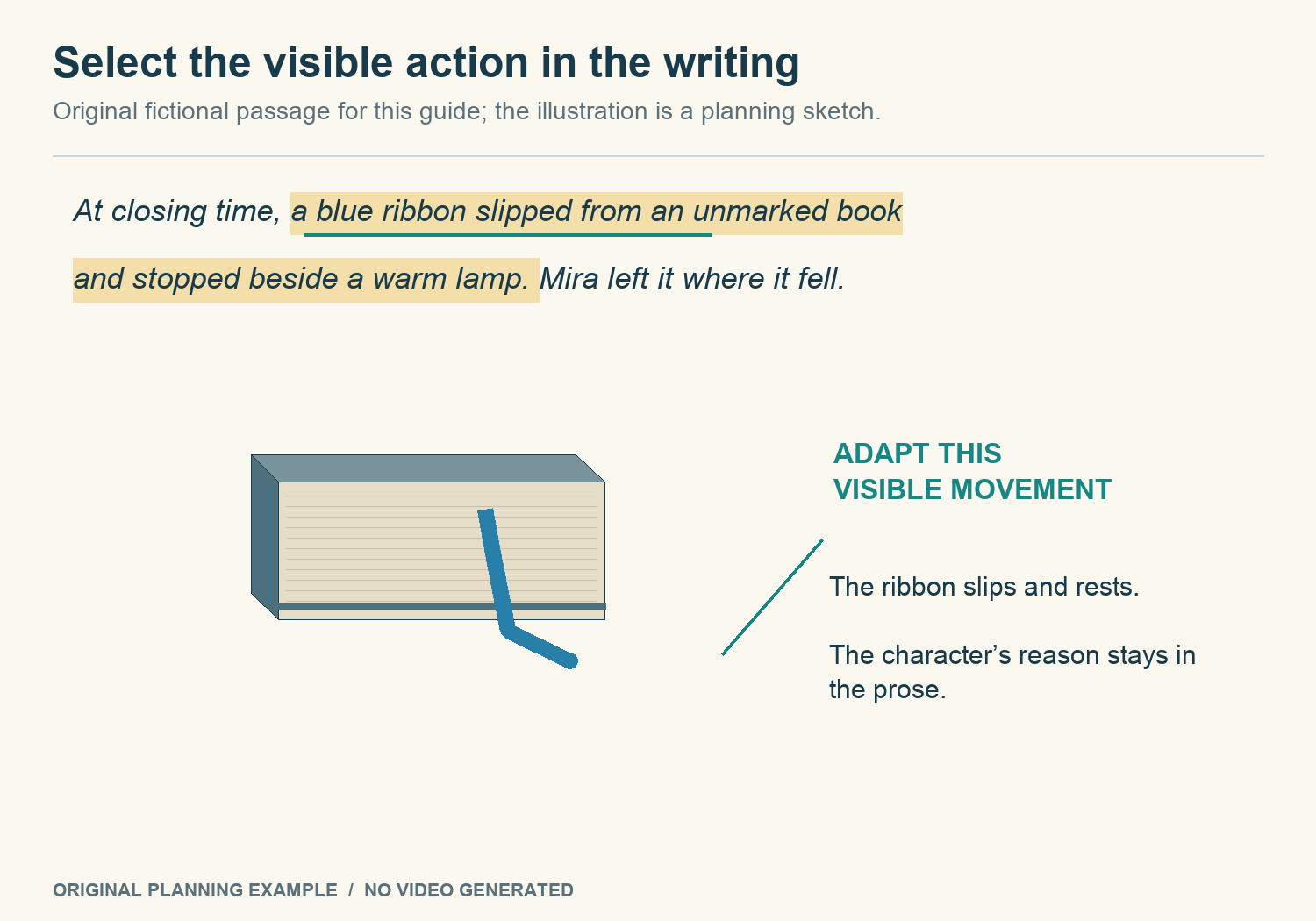
At closing time, a blue ribbon slipped from an unmarked book and stopped beside a warm lamp. Mira left it where it fell.
There are two kinds of information in it. A ribbon slipping from a book is a visible action. The choice to leave it alone belongs to the character and the surrounding story. A brief view of a book cannot, by itself, establish why Mira makes that choice.
For a first sample, adapt only the visible action. Keep the passage next to the visual so the reader can compare the two forms. You do not need to add a face, a hand or a whole room to justify the exercise.
Write the purpose in one sentence:
This sample explores how a small, quiet movement can direct attention to an object that matters in the prose.
That purpose gives the sample a role in a writing portfolio. It is about selection and adaptation. It does not claim to demonstrate a complete filmmaking service or to prove that a particular visual style will attract clients.
Turn the passage into a shot brief
Use the smallest scene that preserves the selected detail:
- An unmarked book on a plain desk.
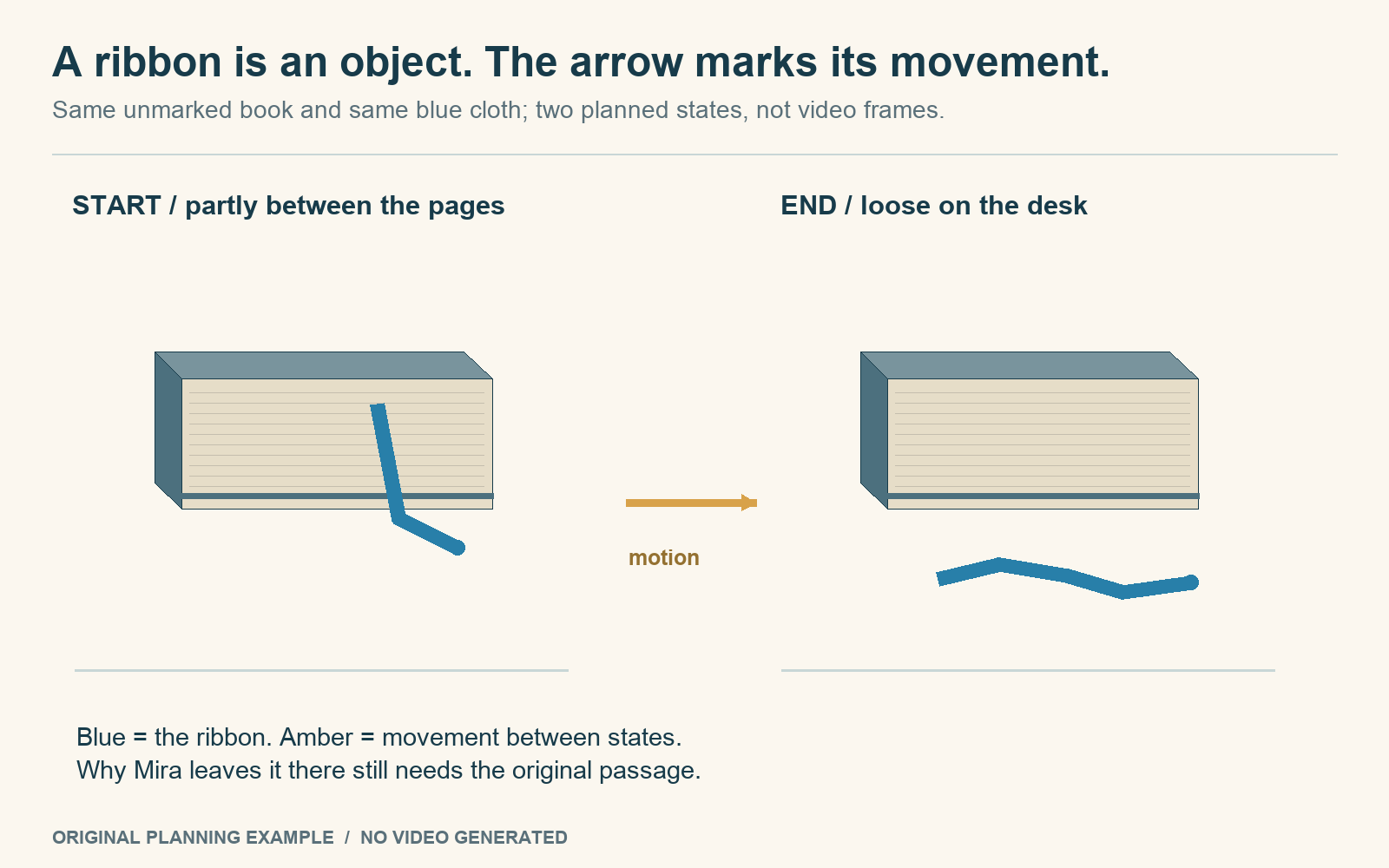
- One blue ribbon partly tucked between its pages.
- A lamp to one side, with the light already on.
- A close, fixed view that shows the book, ribbon and space where the ribbon will stop.
The lamp is setting, not a second event. Asking it to flicker, rotate or switch on would change the focus. Likewise, the phrase “at closing time” may be clear in prose but does not need a clock or a shop sign to be illustrated in this particular view.
A starting text prompt could read:
An unmarked closed book rests on an ivory desk beside a softly glowing lamp. A single blue ribbon, partly tucked between the pages, slips down and comes to rest on the desk. Keep the book and lamp still. Fixed close view, one continuous gentle movement, no scene change.
This is a proposal to try. If the movement is not expressed clearly, the useful question is whether to change the input, simplify the movement or choose a different detail from the prose. A longer prompt is not automatically a better interpretation.
Keep the prose and the adaptation honest
The visual sample should not silently add facts that change the writing. If the book acquires a readable title, the viewer may infer a specific subject. If another object appears beside the ribbon, it can look like a new clue. Decide whether those additions belong to the story before retaining them.
Use a short comparison note after you have an actual candidate:
Original detail: a blue ribbon slips from an unmarked book.
Adaptation purpose: direct attention through one small movement.
What the saved clip visibly shows: [write after viewing].
Difference from the prose: [record any meaningful addition or change].
Decision: keep, revise or select a different detail.
Keep the observation field empty until you have watched the result. This prevents the description of an intended scene from turning into an invented account of what the tool produced.
For two-frame input, prepare a start image with the ribbon partly in the book and an end image with that same ribbon resting on the desk. Preserve the book, lamp and view. The current AI VideoWeb free image route requires both images, in order; a single reference image is not enough for that form.
You can also stay with text while exploring the idea. Use the route that fits the material you have rather than creating elaborate image assets before deciding what the sample is meant to communicate.
Build a small portfolio card around the clip
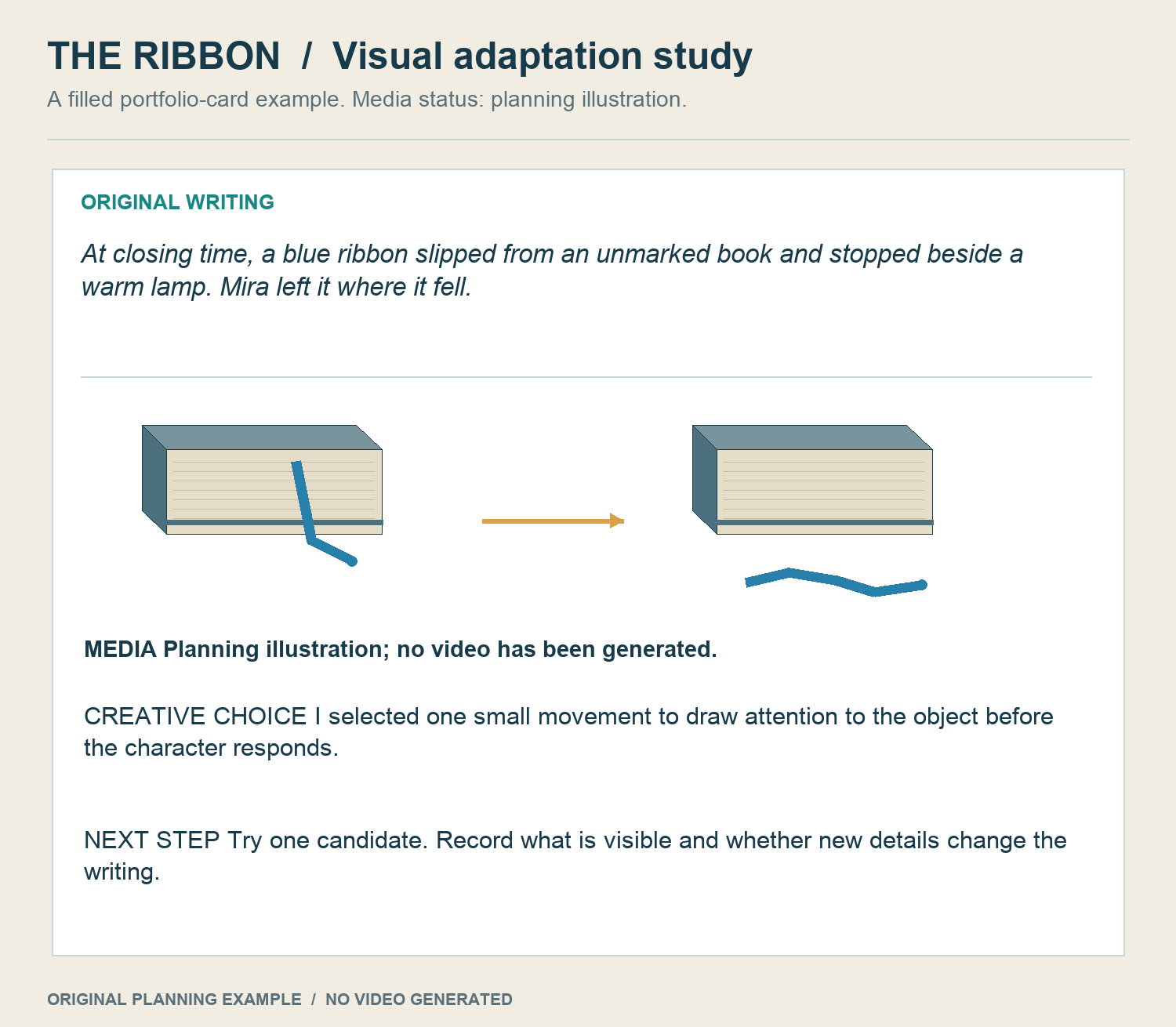
A reader should be able to understand your contribution without guessing. Keep these elements together:
Original writing. Include the passage or a permitted excerpt, plus its title and authorship. For someone else’s work, obtain the permission needed for the use; choosing an available online passage does not establish that permission.
Creative choice. Explain why you selected that one visible detail. A sentence or two is enough. “The ribbon is the first thing the reader notices before the character responds” explains a choice; “cinematic storytelling” does not.
Media description. Identify the video as an AI-generated concept sample once you have actually generated it. While it is still a storyboard, call it a storyboard or planning illustration. Avoid a label that implies filming, a commissioned project or personal experience you did not have.
Next step. Say what you would revise or develop if this idea moved forward. That might be a different view, timing, an additional scene or real production work. Keep the statement tied to the sample rather than promising a business outcome.
Try the concept at the available specifications
The AI VideoWeb free AI video generator can be used to try the short scene after the writing and adaptation choices are clear. As documented on 22 October 2026, the current free form displays five seconds and 480p, without signup and with unlimited total attempts. Verification and queue waiting can still apply.
Keep the original writing, the prompt, any input images and the selected file together. If you keep several candidates, label which one the portfolio card describes. The explanation should follow the actual selected clip rather than an earlier, more successful-looking intention.
For the fictional ribbon passage, a useful finished card would let a reader see the words, understand why the movement was chosen and recognize the sample’s production method. That is a clear account of your work. It gives a prospective collaborator something concrete to discuss without disguising a concept study as an experience or service you have already delivered.
Disclosure: This article is provided by the AI VideoWeb team at FLAQ TECH PTE. LTD.